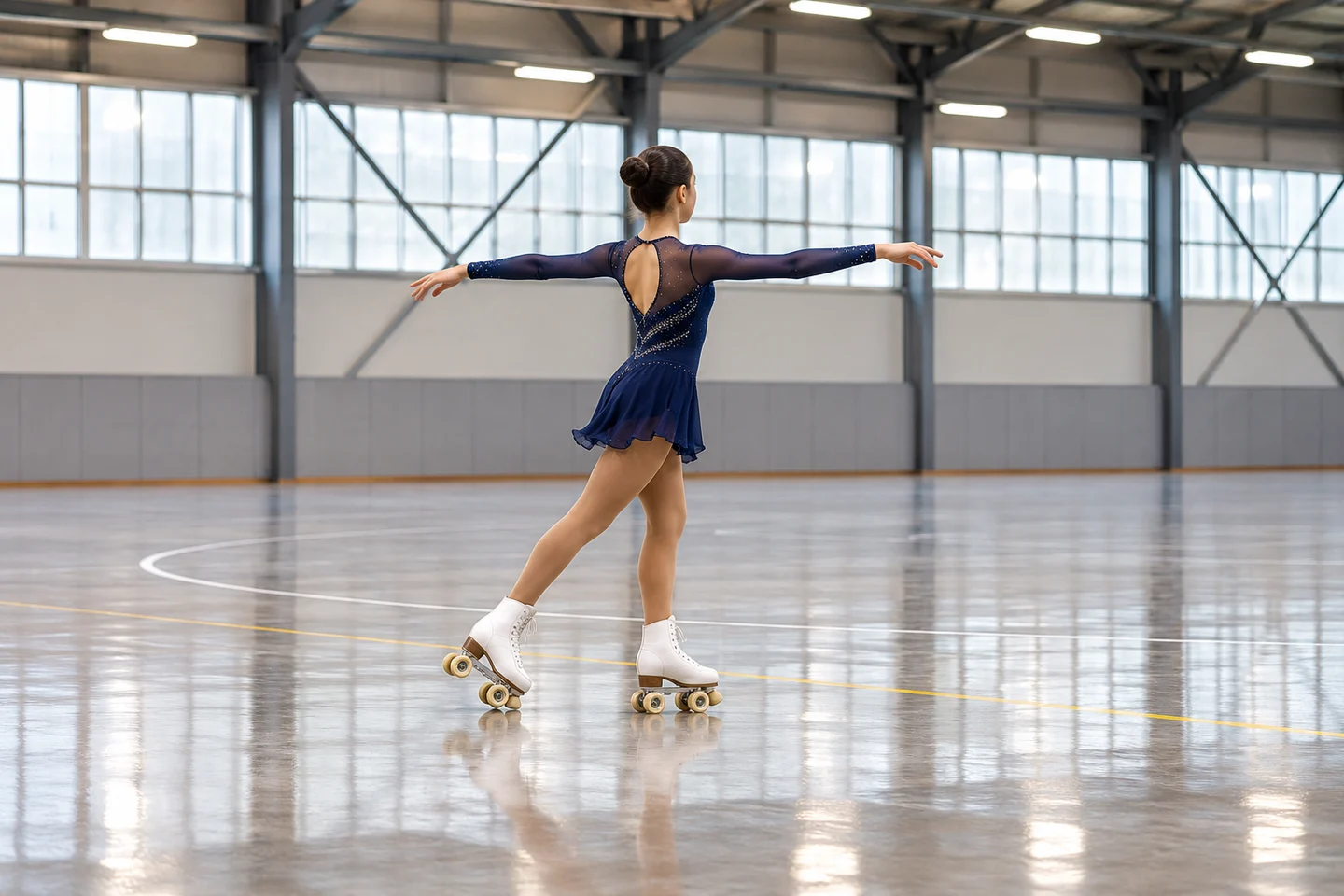
The first time you watch artistic roller skating, try calling out the elements in one routine. The jump is easy to spot. An edge or a turn that sets it up takes a closer look. Here are the questions to start with.
A spectator’s quiz
- How far does a single axel turn?. One and a half revolutions. A forward take-off and backward landing give it that extra half turn.
- What is a jump combination?. Two or more jumps linked so the landing of one sets up the next. Watch for the rhythm between take-offs.
- What are figures and loops?. Skaters trace a prescribed shape, holding the required edge and adding turns where the figure calls for them. In a loop, look for how closely the skater follows the small loop section.
- Where can you spot front crosses?. Look at the footwork in dance or freestyle, particularly where one foot crosses in front of the other to carry a curve.
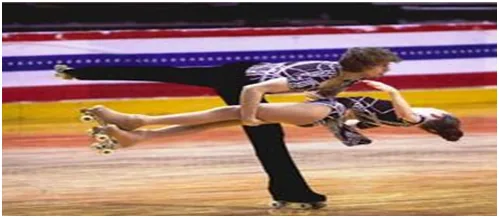
- What makes pairs different?. Two skaters work through a routine together. Watch their timing in side-by-side jumps or spins and how they set up lifts and other paired elements.
- When does the toe stop come into play?. Some freestyle jump take-offs use it. Watch which foot plants and whether the skater leaves from an edge or with toe assistance.
Keep the old rule questions in context
The 2015 RollBack quiz also asked about the inside edge on figure 9A, where a Lutz could appear in a combination, the number of repeated jumps and when lyrics were allowed. Those answers depend on the event and rulebook. If you’re entering or judging a competition, check the event’s current technical requirements for the exact figure, content or music rule.
Pick one thing to follow in a whole routine
Watch the last curve before a jump. The skater uses an inside or outside edge to bring the body into position, leaves the floor and needs a controlled edge to get out again. An edge is the side of the skate the skater is leaning and travelling on. You can spot it by looking at the direction of the curve and where the knee sits over the skate. In pairs, watch whether both skaters finish at the same time and have room for the next element.
A clean landing is easy to applaud. Watching what happens before and after it makes the rest of the routine much easier to read.