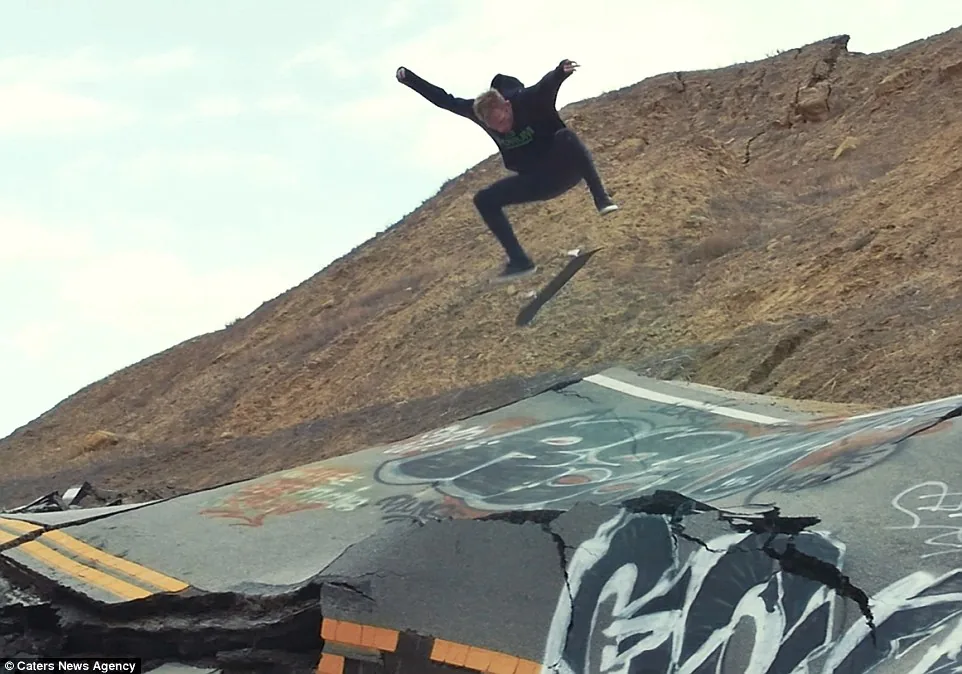
The road in the 2015 footage no longer looked like a road from the air. In Santa Clarita, California, the damaged surface rose and dipped along a stretch that had been closed to motorists. Tyler Johnson, then 18, and friends took two cameras, a drone and skateboards to see what it looked like from ground level as well.
What the two views show
The overhead footage shows the length of the damage and how the cracks run across the surface. From the skateboarder’s level, you can see how abruptly the road changes shape. A fold that looks gentle from above can put a rider into a dip or leave them looking for a way to roll away.
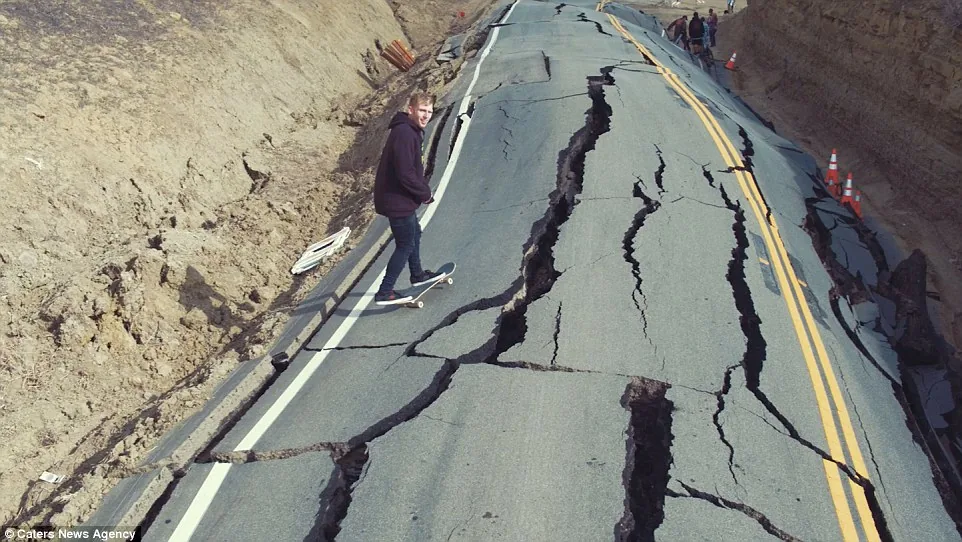
Johnson said there were locals looking at the road and that his group were the only ones skating it. The site was closed and the ground had shifted. The footage is a record of the scene and a chance to see how differently it reads from the two angles.
When a spot is only a film
The two perspectives tell you different things. From the drone, the broken road looks like a series of banks. Near the wheels, you can see the sharp breaks, changes in camber and places where a landing would run into another crack. Those details are part of why a real park plans the run-out as carefully as the feature a rider takes off from.
The road had been closed to vehicles, and the footage was made around a landslide. The value of the clip is in seeing what the riders and filmmakers noticed in a single stretch of damaged tarmac. Its unexpected shapes are worth watching from the safety of the screen.