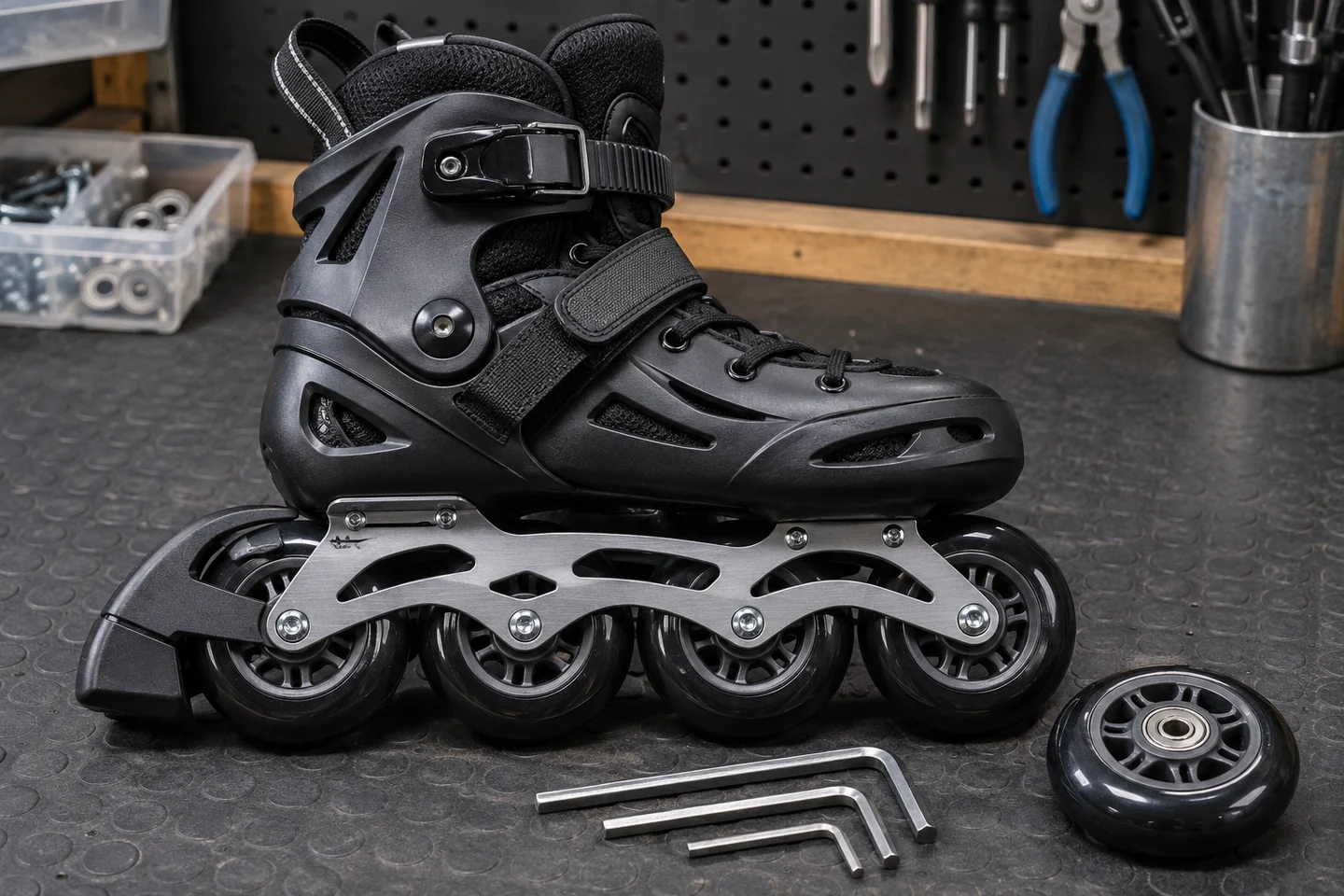
A recreational inline and an aggressive skate have wheels in a line, but the job you want the skate to do makes a big difference. Think about your first few sessions. Are they on a smooth path, at the park, or mainly about turning through town at low speed?
Check the boot first
Measure both feet and consult the exact model’s chart. Fit can differ between shells even within one brand. Try both boots with the socks you plan to use. The heel should stay seated when you bend forward. Any pressure that makes your foot go numb is a reason to try a different shape.
Shortlist a frame and boot
| Where you’ll skate | First setup to consider | Check before ordering |
|---|---|---|
| Smooth paths and recreational sessions | Fitness skate with a comfortable boot and a heel brake if wanted | Is a brake included and can you buy replacement pads? |
| Urban practice and tight turns | Supportive urban shell and a manoeuvrable frame | Can you bend forward comfortably and reach the closures? |
| Ramps and grinds | Aggressive skate designed for park use | The boot, sole plate and frame are designed for the tricks you plan to learn. |
| Child learning in different spaces | A model with a size range that fits now | The mechanism locks securely and there is no heel lift at the usable setting. |
Compare wheel layout without the sales language
A four-wheel frame with smaller wheels generally keeps the foot closer to the floor. Three larger wheels may roll more smoothly on imperfect paths. Look at the frame’s actual length as well as wheel count. A longer frame tends to feel more settled in a straight line. If you’re starting out, the setup that lets you bend, turn and stop comfortably is the one to shortlist.
If you’re between sizes, measure both feet again, and note your usual skating socks and any wide or narrow fit preference. Check the exact manufacturer chart and whether the boot is designed to fit closely around a removable liner. Try both boots before skating outdoors if you may need to exchange them.
Learn when and how to rotate inline wheels
Browse inline and aggressive skates
Inline skates to compare
 FR Skates FR1 80 Inline Skates – Black
 FR Skates FR1 310 Inline Skates – Black
 FR Skates FR1 325 Inline Skates – Black
How frame length, diameter and rocker change the ride
Frame length is often given from the first axle to the last. A short frame turns readily, while a longer one usually tracks more steadily. A 4 × 80 mm setup is a useful comparison for recreational use. 3 × 110 mm raises the boot and gives a larger rolling radius, even when the shorter three-wheel frame is similar in length. Compare standing height, heel-brake compatibility and control at low speed.
A flat setup aims to put all wheels on the ground at rest. A rockered one raises end wheels or uses a size pattern so the skate pivots more easily. A hi-lo frame may use two diameters by design. Read the wheel map printed by the frame maker before buying spares.
Frequently asked questions
Do all inlines come with a heel brake?
Check the listing. Many recreational models include one, while some urban and aggressive setups are supplied without one.
Can I fit bigger wheels to my inlines?
Only if the frame and any fitted brake clear them. Use the model’s maximum diameter and the specified axle and spacer hardware.