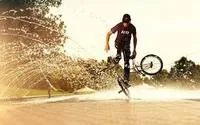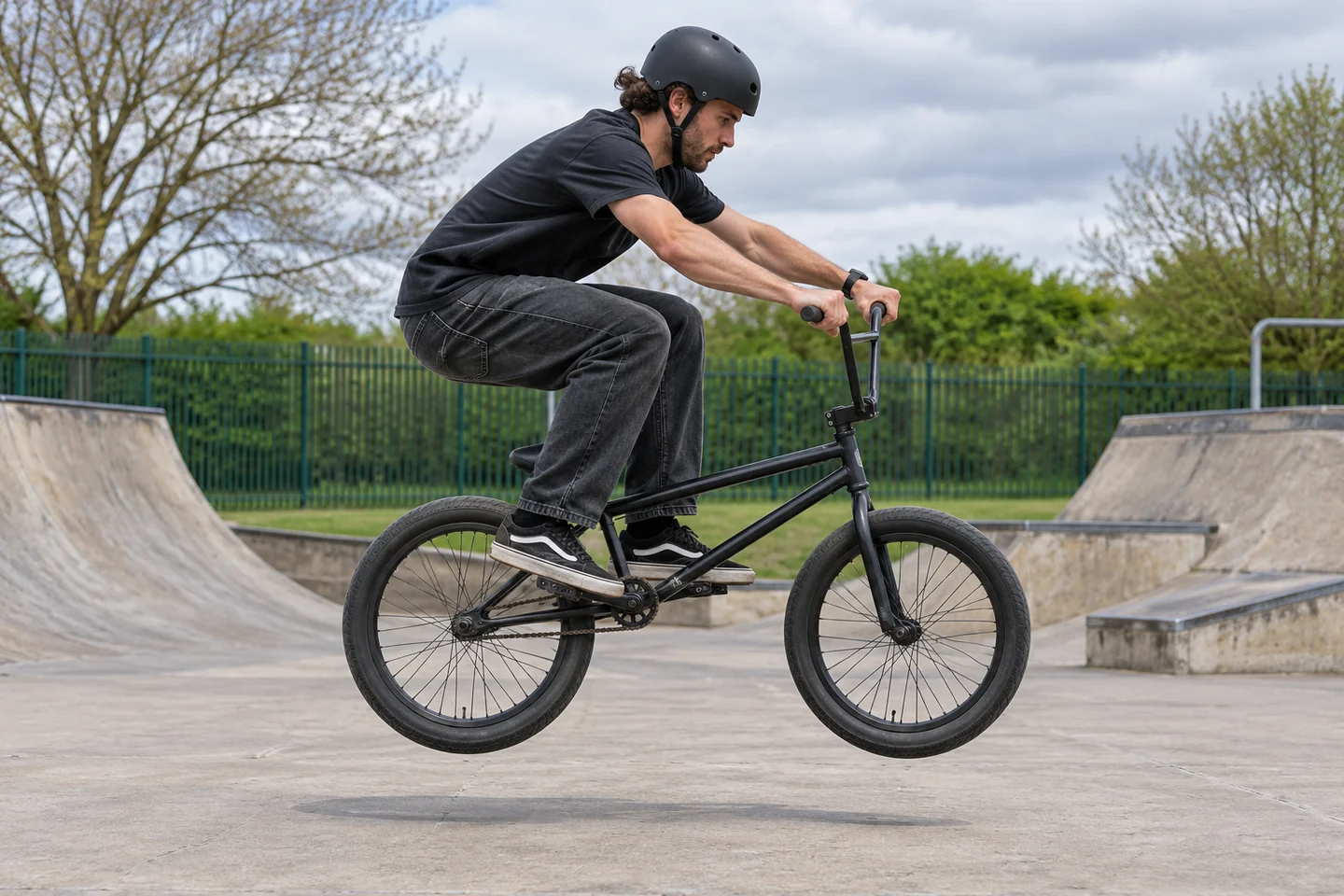
By the early 1970s, children in southern California were racing small bikes on dirt and adapting them for the terrain. A compact frame and simple setup gave riders something they could move around easily over jumps and berms.
Race and freestyle
Racing developed around speed, starts and carrying pace through a track. Freestyle opened up a different set of possibilities across street, park, dirt and flatland. Both still rely on what drew riders in at the start: finding out what a small bike can do on the ground in front of you.
Why race bikes and freestyle bikes went different ways
The UCI dates the California roots to the late 1960s and the start of organised US racing to the early 1970s. The first BMX world championships followed in 1982. The sport became part of the UCI in 1993, by which time it had a competition structure of its own.
A race starts from a gate and rewards acceleration, line choice and momentum through turns. A freestyle run can ask the rider to hop onto a ledge, rotate the bars or use a ramp to move into the next trick. Flatland puts the emphasis on balance and links on a smooth floor. Those needs give a bike builder different decisions about frame reach, wheelbase, tyres and whether a rider wants pegs.
Watch the first corner of a race, then watch a park rider approach a quarter pipe. Both are choosing where to carry speed. The race settles that choice against other riders and the clock. Freestyle gives the rider room to turn the choice into a line of their own.