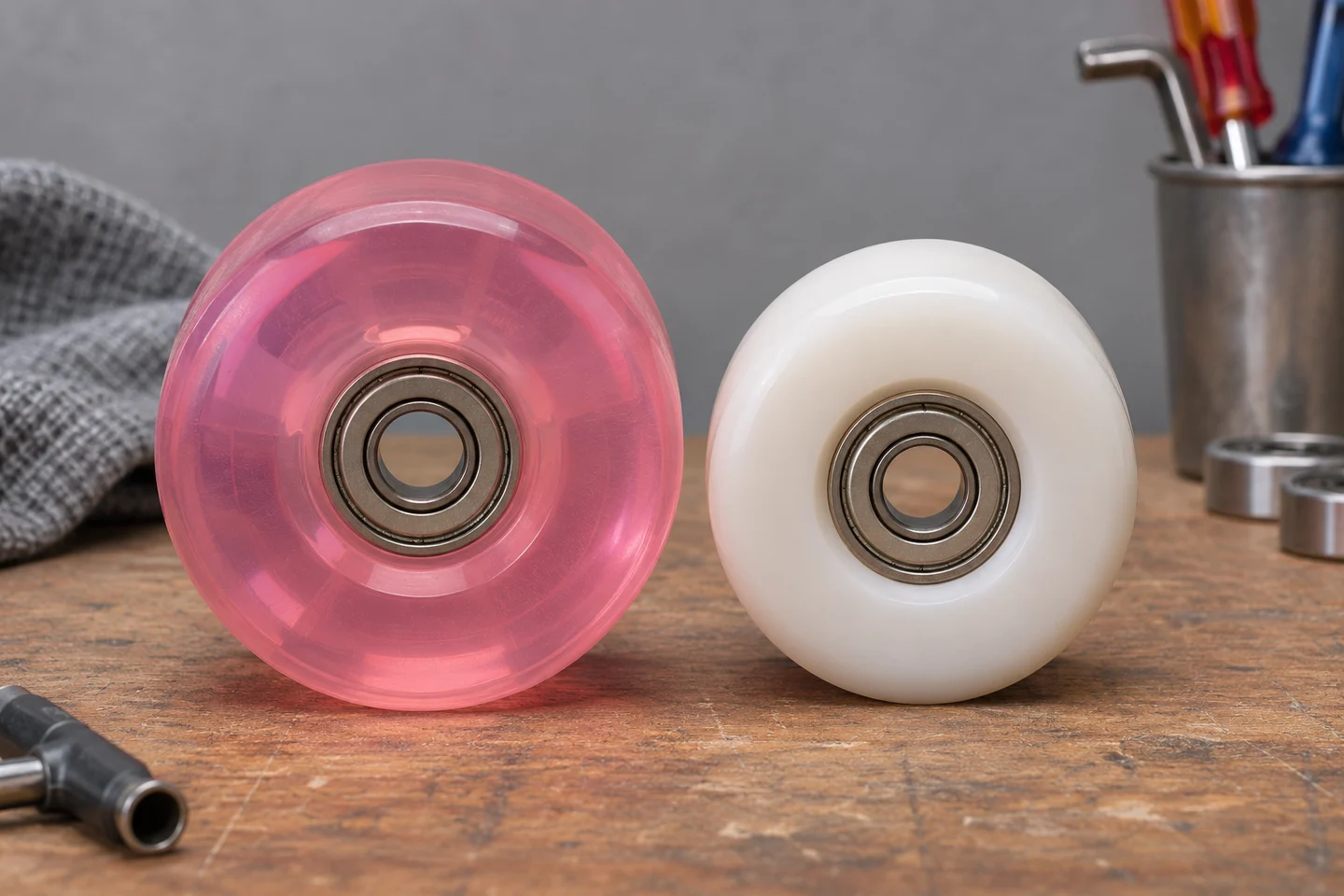
A wheel change is easiest when you can compare the new wheel with the old one on the bench. Check that the replacement has the right bearings for the axle, and that its width and diameter leave room under the plate and boot.
Change the wheels in order
- Set out the parts. Have the correct skate tool, replacement wheels, two bearings per wheel and any spacers or washers your setup uses.
- Remove one wheel. Keep the skate steady. Loosen the usual right-hand axle nut anticlockwise while looking directly at it. Slide the wheel off and lay its fittings in order.
- Fit the new wheel. Fully seat the bearings and spacer if used, then slide the wheel onto the axle with its washers in the original arrangement. Start the nut by hand so it threads cleanly.
- Check the nut and spin. Tighten to the maker’s guidance. The wheel should turn freely with no obvious side play and the locking part of the nut should engage fully. If it binds, check the seating and parts.
- Test the set. Repeat on the other wheels, spin each one and check for boot or plate contact. Roll slowly on clear flat ground and recheck the nuts before a full session.
What the wheel should feel like afterwards
Hold the skate by the boot and rock each wheel across the axle. It should spin without dragging and without an obvious sideways knock. Compare the replacement with the old wheel: some hubs are offset and place the tread or sidewall farther inboard. Lean the skate gently against the floor and check that the inside shoulder clears the boot, plate and nuts.
If the nut tightens but leaves too little thread for the locking insert, stop and compare hub width, washer arrangement and the axle’s usable length. Don’t omit a specified washer or back the nut off past safe engagement to make an incompatible wheel fit.