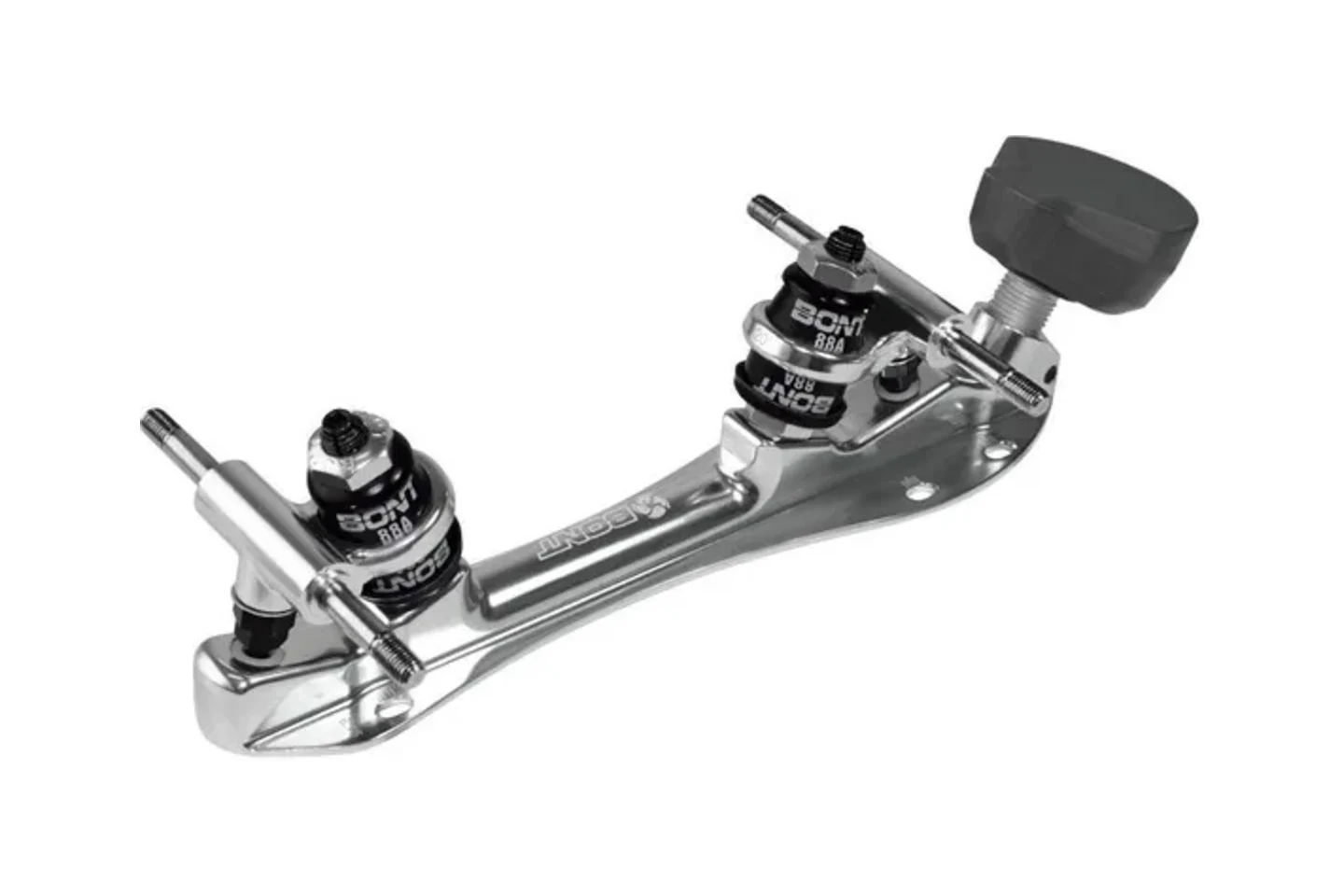
Turn the skate over before you order a replacement. A bolt-on stop fixes through the centre with a bolt. An adjustable stop has a threaded stem and is held by a locking nut or a plate clamp. Buy the type specified for your plate and check the thread and length for an adjustable one.
Take the old stop out
Support the skate on a steady bench. On a clamp-style plate, loosen the clamp as the maker directs before turning the stem. On a locknut setup, loosen the nut first. With a bolt-on stop, remove the centre bolt using the proper tool. Look at how any washers are fitted so you can put them back in the right order.
Fit the replacement by hand first
Start the thread by hand so it goes in straight. Set adjustable stops to a height you can use comfortably and keep the maker’s required amount of thread inside the plate. Tighten the locknut or clamp to the manufacturer’s directions. Use the hardware specified for a fixed stop. Check both stops sit evenly.
Recheck before you skate
Pull and twist each stop by hand to check it is held. Practise a controlled stop on clear, flat ground at low speed. If the stem or bolt won’t seat securely, stop and have a shop check the plate threads. Inspect the stops regularly, especially after a new pair has bedded in.
Take the old stop to the shop
Two threaded stems can look alike without matching. Check the model of the plate and compare the manufacturer’s thread, stem length and mounting style. Take the old stop and washers with you if you’re unsure. Use the maker’s instructions for minimum thread engagement and tightening.
| What you see | What to do |
|---|---|
| Bolt through the centre of the stop | Use a compatible bolt-on stop and the specified bolt and washers. |
| Threaded stem with a locknut | Set the stop as directed, then tighten the locknut against the plate. |
| Threaded stem with a side clamp | Release and tighten the clamp as instructed by the plate manufacturer. |
When to stop and get the plate checked
If a stop spins after tightening, the bolt won’t seat or the stem binds when you start it by hand, stop. Check you have the correct replacement and ask a shop to inspect the threads or clamp. After fitting, compare both skates and check that the stops stay in place at walking pace before skating normally.
Match the thread and usable stem length
Many US-pattern adjustable quad plates take a 5/8-inch stem, while some use a different or metric fitting. Check the plate manual or the stop code. A stop that starts but becomes tight after a fraction of a turn can have the wrong pitch or damaged threads. Never force it.
A longer stem gives more range only if enough thread is engaged at the setting you want. If the stop drops very low, you’ll reach it earlier when tipping the skate forwards. If it sits high, the heel has to lift farther. Fit both skates to the maker’s engagement and tightening guidance, then compare how easily you can reach and control each stop at walking pace.
Frequently asked questions
Can I use a jam plug as a toe stop?
A jam plug serves a different purpose. Use the equipment and stopping technique appropriate to your skating, and check the session’s rules.
Should I adjust both to the same height?
Start with a matched height if your setup and discipline call for it, within the maker’s range. Check both are secure before you roll.