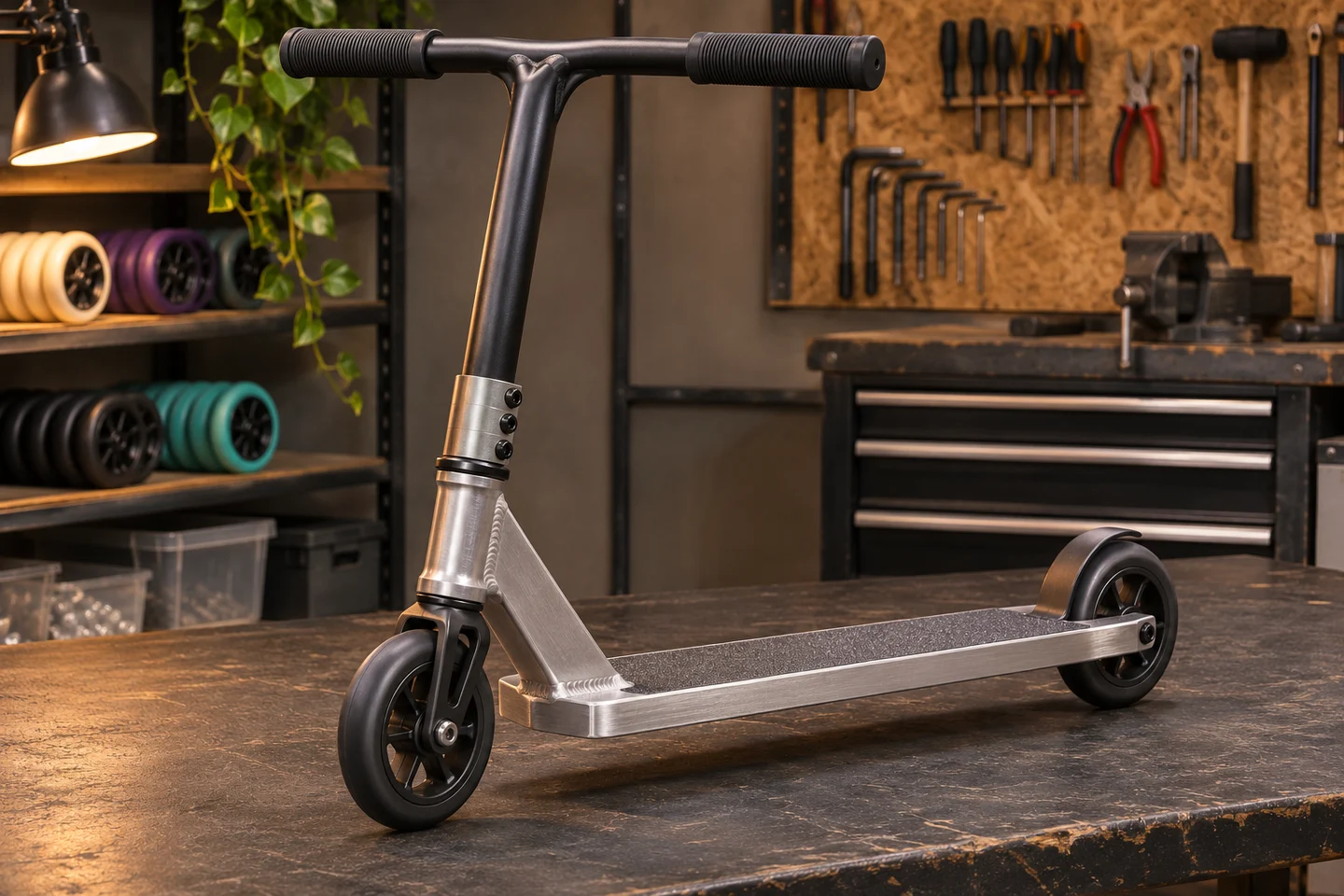
A quick check can tell you where a new rattle or bit of play is coming from. Do it at home or to the side of the park with the scooter stationary. Use the manual for the model, particularly if you’re adjusting a part of the front assembly.
Check the bar and front end
Look for bars and grips that move independently of the fork. Hold the front wheel steady and feel for movement at the bar or headset. Turn the bars slowly and check they move freely. Any play, binding or damaged clamp hardware needs attention before riding.
Check the wheels and deck
Spin each wheel and look for wobble, splitting urethane or a wheel touching the fork, deck or brake. Check the axle hardware is secure and inspect the deck and welds. A crack or suspected structural damage means putting the scooter aside until a shop or the manufacturer can assess it.
Check the rear brake or fender
If your setup has a brake, check it returns as intended and operates consistently. Make sure a fixed fender is secure and clears the wheel. After any adjustment, use the maker’s tightening instructions and do a low-speed check away from other riders before returning to the park.
Trace a rattle before turning a bolt
Hold the front wheel steady and feel for movement at the grips, bar and headset. Then spin each wheel and listen for rubbing. A rattle can come from more than one place, so isolate it before changing anything. Follow the correct manual for your compression system and the maker’s tightening instructions.
| What you notice | Next step |
|---|---|
| Bars move separately from the front wheel | Check the clamp and compression setup against the manual. Get help if it won’t hold securely. |
| Wheel rubs or wobbles | Check the axle and spacer arrangement, wheel clearance and signs of wheel damage. |
| Crack or suspected damage around a weld | Stop riding and ask the retailer or manufacturer to assess it. |
| Brake sticks or does not return | Check the brake for damage and have it put right before riding. |
After maintenance
Recheck that the bars turn smoothly, wheels spin freely and the brake or fender stays in place. Test at low speed in a clear area. If a fault returns after a few pushes, stop and have it assessed.
Check replacement wheel measurements
Isolate the clamp, headset and wheel in that order
Hold the front wheel between your feet and turn the grips gently. If the grips turn while the wheel stays put, look at the clamp and bar interface. Next hold the front end still and rock the deck gently. A knock near the head tube points you towards the headset or compression. Lift the wheel and test for sideways play or a scrape against the fork.
Repeat at the rear and check the brake or fender bolts. Wipe the underside to inspect the welds and deck corners after a hard landing. A crack, bent axle, bar that turns separately or thread that won’t hold calls for a repair before the next run.
Frequently asked questions
Should I tighten every bolt as hard as I can?
Use the maker’s specified settings and correct tool. Excess tightening can damage threads or make a part bind.
The scooter is new. Does it need a check?
Yes. Follow the assembly directions and check all the relevant fittings before your first session.