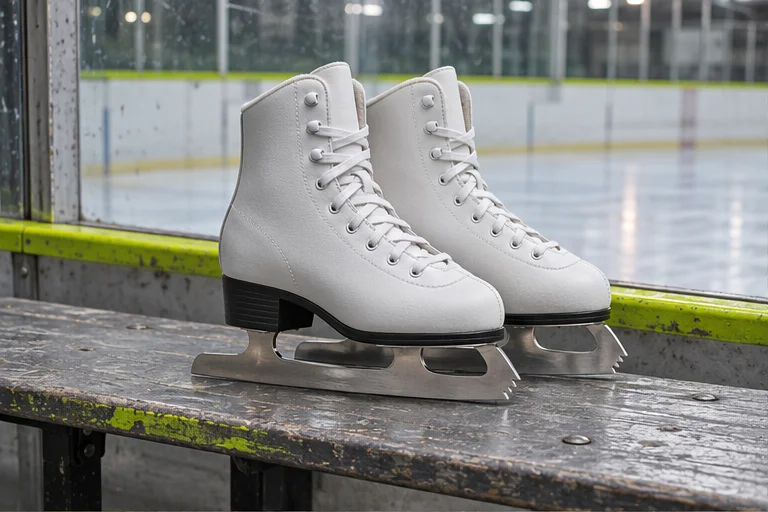
Ice and condensation can leave a blade wet even after you’re back in shoes. The job takes a minute at the rink and another check when you get home. Keep an absorbent cloth in the bag so it becomes part of packing up.
Wipe the steel at the rink
Take off any hard walking guards and wipe both sides of each blade and the metal around the mounting area. Hold the boot securely and wipe carefully away from the edges. Check for damage or rust marks, especially after the skates have been left damp.
Air everything out at home
Open the boots and loosen the laces. Take them out of the bag to air and dry naturally. Hard walking guards can hold moisture, so store them separately when the skates are put away. Use dry blade covers designed for storage if the manufacturer recommends them.
Ask a technician when the edges feel different
If one edge keeps slipping, the blade looks damaged or you’re unsure whether it needs sharpening, let a skate technician check it. Keep the same type of sharpening you’re used to unless you and your coach or technician have a reason to change.
Pack away in two stages
At the rink, use a clean cloth on both sides of the blade and around the mounting points. Use blade covers suited to transport if the maker recommends them. When you get home, remove the skates and anything damp from the bag. Dry the blades again if moisture has condensed on the steel.
| Item | When it helps |
|---|---|
| Hard walking guards | Walking off the ice where the rink allows them. Remove before drying and storage. |
| Absorbent blade covers | Transport or storage as advised by the maker. Dry the covers separately after use. |
| Clean cloth | Drying steel and around blade mounts after skating. |
Store the skates where air can circulate. Inspect the edges under good light. Rust, nicks or a blade that keeps slipping on one edge are reasons to ask a skate technician to check it.
Check the steel and the boot where moisture collects
Wipe both sides of the runner and dry around the blade holder, screws and heel. Check the lower edge under a bright light. An even line and a smooth edge are useful signs. Deep rust pits, a ding that catches a cloth, loose mounts or inconsistent edge grip need a technician’s inspection. A shallow surface mark and a damaged skating edge call for different treatment.
At home, open the tongue and take removable insoles out if the maker permits. Let absorbent covers dry away from the skates and store everything dry and ventilated. Put hard guards back on only when you need to walk off the ice.
Frequently asked questions
How often do I need a sharpen?
It depends on your blades, use and the rink. Ask a technician when the edges feel different or you see damage.
Can I leave the blades in their hard guards until next week?
Take the hard guards off after use and dry the steel. Hard guards can trap moisture around the blade.