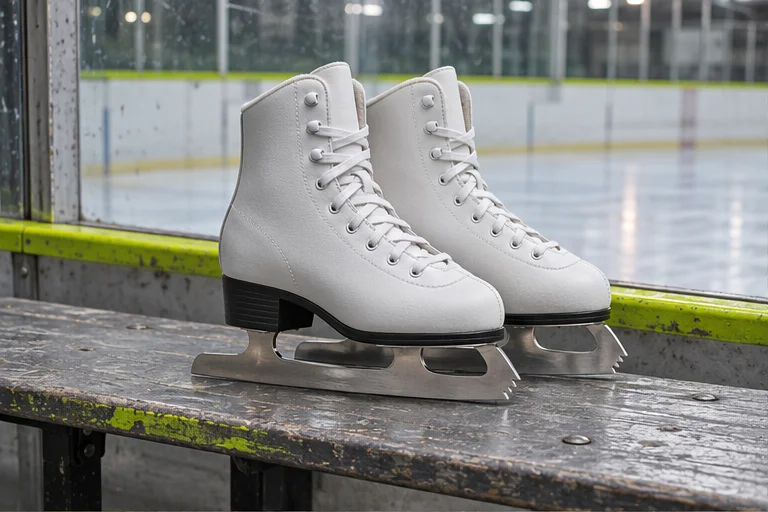
If you’re going to the rink for lessons, ask your coach what they teach in before you buy. Figure and hockey skates use different blade shapes and boots, and either can feel unfamiliar if you’ve mainly been skating on rentals.
Start with the session
A figure skate has a toe pick and a blade designed for figure skating’s edge work and elements. A hockey skate has a rounded blade profile without a toe pick and a boot designed around hockey movement. A recreational skate may be right for someone who goes for occasional public sessions. Try the style you expect to use most.
Check the fit on both feet
Get both feet measured. The boot should hold the heel with space for the toes and enough ankle movement to bend at the knee. A very stiff boot may be more than a new skater needs. Ask the fitter what the model is intended for and how it should feel before any adjustments.
Plan for blade care
Ask whether the blades have already been sharpened and whether they need a first sharpen. Get a skate technician to check. Use guards for walking off the ice, dry the blades after the session and store them dry. Bring a towel and follow the blade maker’s care instructions.
Use the blade and boot for their intended session
| Type | Typical use | First fitting question |
|---|---|---|
| Figure skates | Figure lessons and edge work | What level of support does the coach recommend for the skills you’ll learn? |
| Hockey skates | Hockey training or the feel of a hockey blade | How well does this heel and forefoot shape fit both feet? |
| Recreational skates | Occasional public sessions | Can I bend at the knee comfortably and get a first sharpen nearby? |
A figure blade has a toe pick and a different profile from a hockey blade. It can take time to adjust after rental skates. If your first sessions are lessons, check what the instructor expects. Ask a skate fitter about boot stiffness and blade sharpening rather than choosing by appearance.
Plan the first trip to the rink
Take a cloth and the guards recommended by your blade maker. Ask which guards are for walking and which covers are for dry storage. Check whether sharpening is included and use a technician who understands the type of blade. If you’re between two sizes, ask the fitter to compare both while you bend into a skating stance.
Dry and store ice skates after the session
Look at the blade before choosing the boot
A figure blade usually has front toe picks and extends behind the heel. The picks are used for certain figure-skating elements. A hockey runner has no figure-style toe pick and is typically rounded more at the ends, with a holder under the boot. Its shape supports quick changes of direction. A recreational rental session is a good place to find out which discipline you intend to learn.
Ask whether the new blades come sharpened for skating. Hollow is the groove between the two edges under a conventional blade. The best depth depends on blade, ice, weight and preference; let the rink technician choose a starting setup and record it if it works.
Frequently asked questions
Can I use the skates straight from the box?
Ask whether the blades have been sharpened and checked. A technician can confirm what the model needs before the first session.
Should a new skater buy the stiffest boot available?
Choose the support suited to the skater and the skills they’ll practise. Ask their coach or fitter if you’re comparing levels.