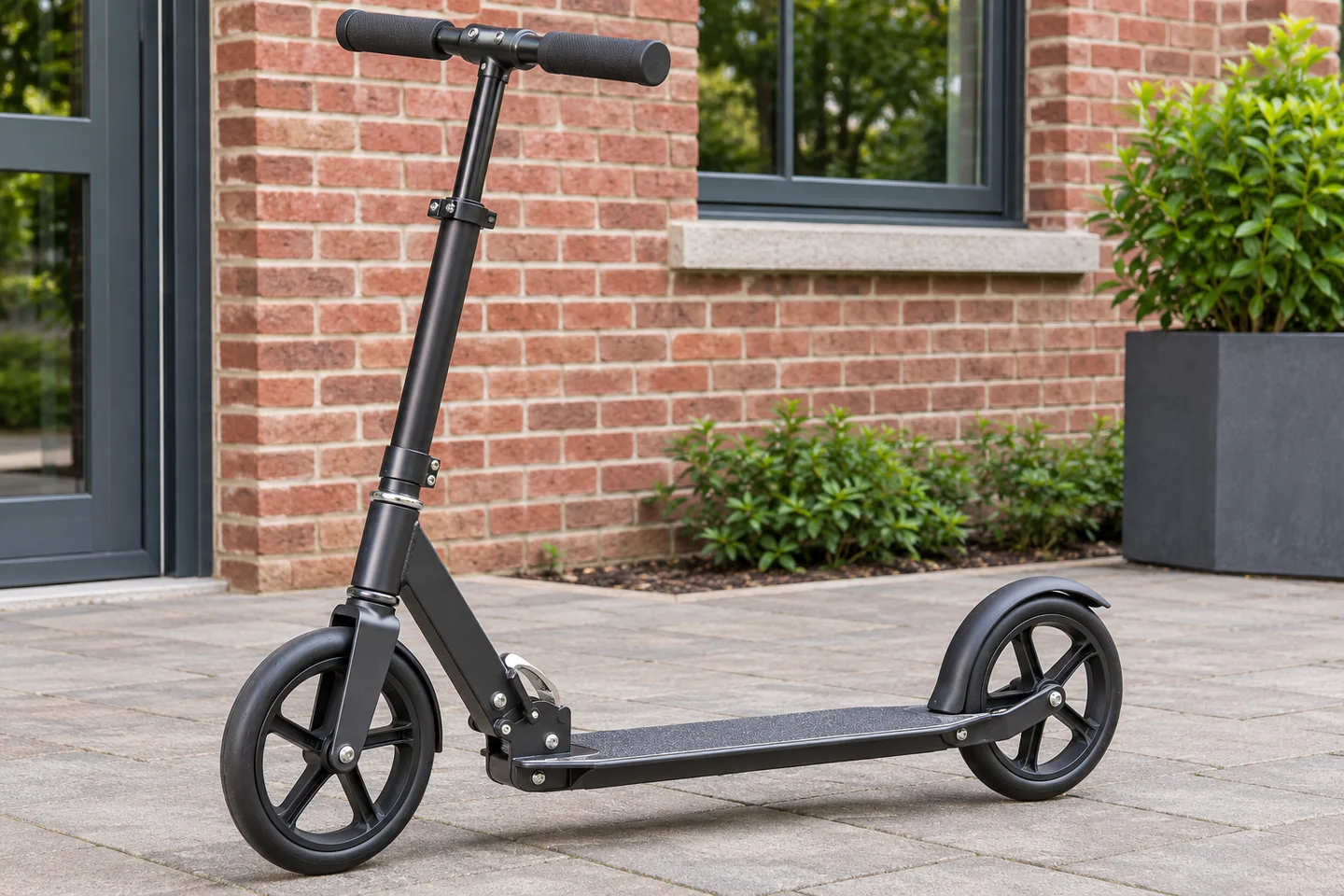
Imagine making a scooter out of the bits in a shed. A length of wood gave you somewhere to stand, a handle gave you something to hold and wheels from an old skate made the whole thing go. Some homemade scooters used a rough pivot to steer. Others relied more on the rider leaning and putting a foot down when they wanted to change direction.
How the scooter took on different jobs
A folding kick scooter made a short trip easier to combine with a bus or a walk. Commuter models could use larger wheels and a wider deck. For repeated landings and tricks, the stunt scooter went towards a fixed bar and rigid deck. From the pavement to the park, the basic idea survived. The changes tell you what each rider was asking the scooter to do.
From making one at home to choosing one for a job
An early homemade scooter could be as simple as a plank with part of an old clamp-on roller skate fixed at each end. Steel wheels rolled on hard ground but could make a lot of noise. Later designs gave riders a choice about what to prioritise. Folding models made carrying easier. Bigger wheels and a hand brake could suit a longer trip. A fixed bar and a rigid deck suited repeated landings at a park.
That explains why two scooters in a shop can look similar from a distance and feel completely different underfoot. The rider still pushes, steers and balances. What changed was the job each design was built to do.