
Picture a busy Saturday at the skatepark. A skateboarder has been waiting to drop in, watching the same line for two runs. A young scooter rider rolls down the bank from the other side, straight across the flat. The skater kicks their board away. Someone shouts, ‘Oi!’ The rider’s dad looks up from the fence, trying to work out whose turn it was.
There’s the old skatepark fight in a few seconds. To the person at the top of the ramp, someone has just cut across a run they’d been waiting for. To the kid on the scooter, there was a gap and an empty bit of concrete. From the fence, it’s hard to see how both can be true.
Who taught you to read a park?
Skateboarding has had decades to shape the culture of skateparks. Stunt scootering came later. For many kids, a scooter is also the first set of wheels they can take to the park. With a handlebar to hold and a foot ready to step down, a young rider can get moving well before they’d feel comfortable pushing and turning on a skateboard.
That early start is part of the friction. A child can reach the middle of a park before they’ve worked out how the park moves. A line is the route a rider takes through a series of features. Someone setting off from a quarter pipe might cross the flat, hit a bank and come back across the very spot that looked empty a second ago. Regulars know where riders are likely to go. A first-timer, or a parent watching from the side, might only see the ramp in front of them.
The complaint that scooter riders don’t know skatepark etiquette comes from real frustrations about crossed lines, blocked landings and skipped turns. The quickest way to change that is to make the rules visible. ‘Wait here. She’s coming back across. You’re up after her.’ That takes about as long to say as it takes someone to roll back up the bank.
Who gets to call it uncool?
There’s also a pecking order at some parks. You hear it in ‘scooters are easy’, usually said as if being able to roll across the flat settles the whole question. Getting moving can be easier. Watch a rider try the same tailwhip over a hip for half an hour, though, and you’ll see how much work goes into getting the deck round, catching it and landing clean.
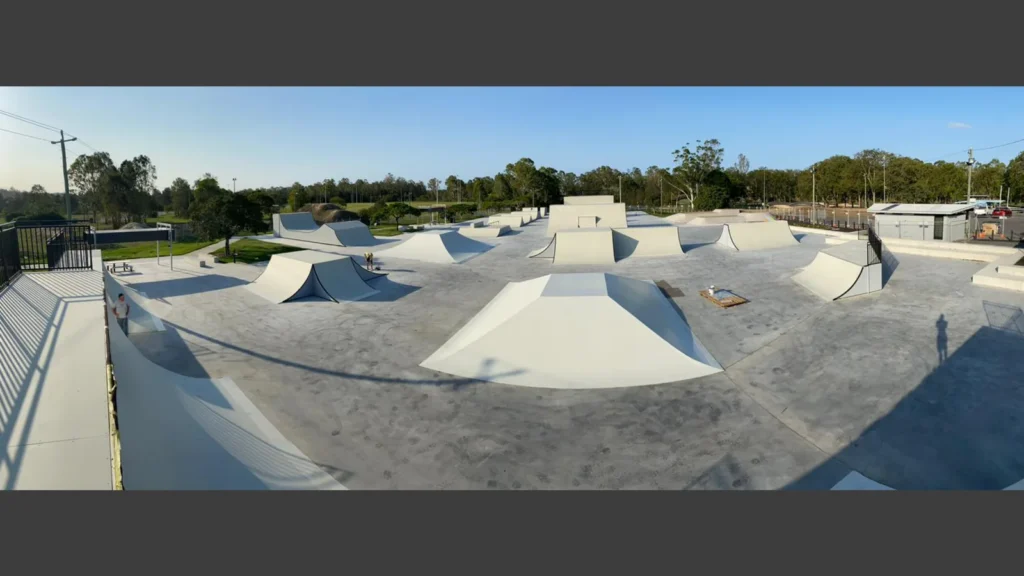
A gap in the concrete can look like a free run to one rider and the middle of someone else’s line to another.
You can see the attitude shifting in small ways. A skateboarder taps their deck on the coping after a scooter rider lands a trick. A scooter rider holds back so a skater can have another go at the line they’ve been trying all afternoon. Then a new kid arrives and still gets judged by what they’re riding before they’ve taken a turn. Both things can happen in the same session.
Make the case for the park
A park that feels like it belongs to one crew can lose the people who might have become its next regulars. As fewer people use a space and speak up for it, it gets harder to make the case for repairs, improvements or another park when council budgets are stretched. A well-used park can show who depends on it, when it’s busy and what people would miss if it went.
There’s already a model for getting different riders in the same conversation. In Cranleigh, a local user group gave early feedback on plans for a new skate and bike park. The council invited skateboarders, scooter riders, BMX riders and rollerbladers to have their say. Read Waverley Borough Council’s project update.
That can start at your own park. A mixed jam gets people riding together. A quick count on a Saturday and a weekday evening gives the council a clearer picture of who uses it. A shared list of repairs, photos of the worn spots and a couple of stories from young riders make for a more concrete conversation than separate complaints about who was in whose way.
What could the people at your park do together to show your council why the space you have is worth looking after, or why your area needs one in the first place?
Cover image: AI-generated editorial illustration.