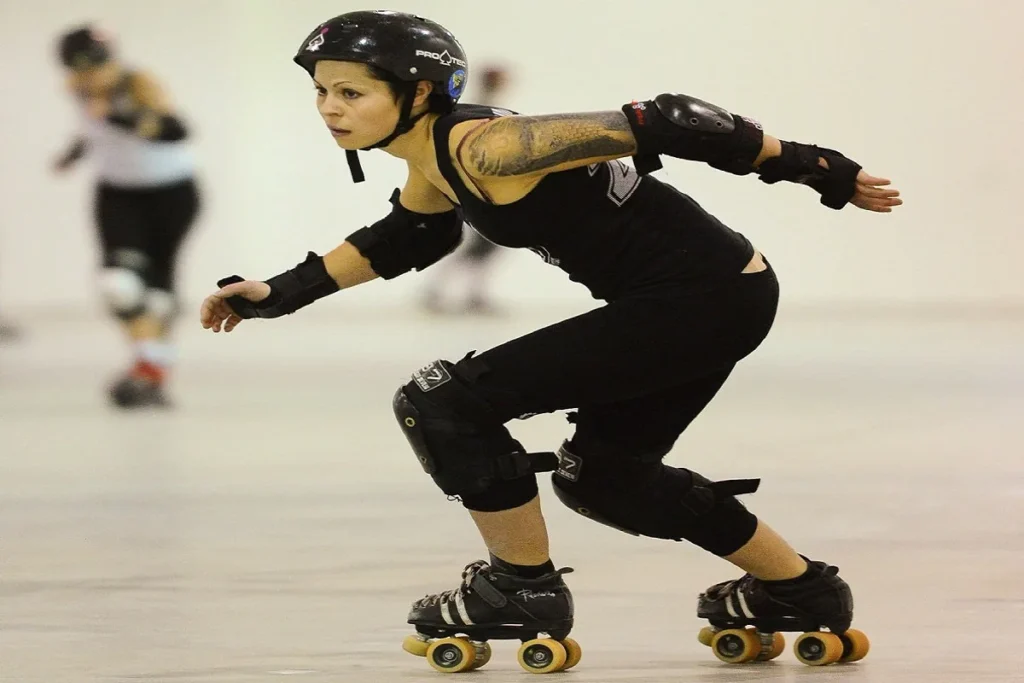
Ask your new league what it expects before ordering. A club may have loan kit for a beginner session. That gives you a chance to find out how a low-cut derby boot feels and which wheels suit the floor before buying a full setup.
What a derby boot needs to do
Derby skaters spend a lot of time shifting weight and changing direction. A low-cut boot is common because it gives the ankle room to move. Check width as well as length and look for a heel that stays put when you bend your knees. A complete can be good value while you’re working out what you like.
Choose wheels for your training surface
A smooth floor can feel slippery to one skater and grippy to another. Ask the club what people use at that venue. Make sure the wheels and bearings fit the plate and axle. If a wheel works for your footwork, give yourself a few practices on it before changing hardness.
The other kit matters
Check the current equipment rules for the league. WFTDA rules require a helmet, mouthguard, wrist guards, elbow pads and knee pads for play, as well as appropriate skates. Try the kit together so you know you can move, bend and stop without pads shifting. Ask your league whether there are any additional requirements for training.
Where a starter budget goes
Budget for the whole kit before comparing plates. A comfortable derby boot and suitable wheels will see more use than a plate upgrade while you’re learning. Try a knee bend and a few supported weight transfers. Check the boot holds your heel without pinching across the ball of your foot.
| Item | Ask or check before buying |
|---|---|
| Boot and plate | Confirm fit, axle diameter, and whether the plate takes a fixed or adjustable stop. |
| Wheels | Ask the league what people skate on that floor and compare grip on a borrowed set if available. |
| Protection | Ask for the current league list and try all items together, including the mouthguard. |
| Spares | Check stop threads, wheel and bearing sizes, and where replacement parts come from. |
Use your first sessions to decide on upgrades
If the skates feel unstable, ask a coach to check the fit and setup before changing wheel hardness. If the loan wheels work on the venue floor, note their shape and feel. Start with what lets you practise consistently, then revisit plates, cushions or boots once you can say what you want to change.
What to ask at your first derby session
A low-cut boot often gives more ankle movement for starts and lateral steps. Heel lock keeps the boot travelling with the foot when you change direction; lace up and try a knee bend and lateral step. Check toe-stop adjustment range, mounting type and whether a replacement is easy to get. For an indoor league, test the floor before choosing a firm wheel.
Ask the league about loan kit, current competition and training requirements, and the approved helmet, mouthguard, pads and toe-stop setup. Get the fit right in the boot you can train in today. If your wheels slide when you push laterally, tell the club what compound you’re using and what the floor is like.
Frequently asked questions
Can I try derby in my recreational quads?
Ask the league. It can tell you what meets its rules for the floor and session and whether its loan kit gives you a better first fit.
What should I bring to a fitting?
Bring your skating socks, both foot measurements and the league’s kit list if it has one.