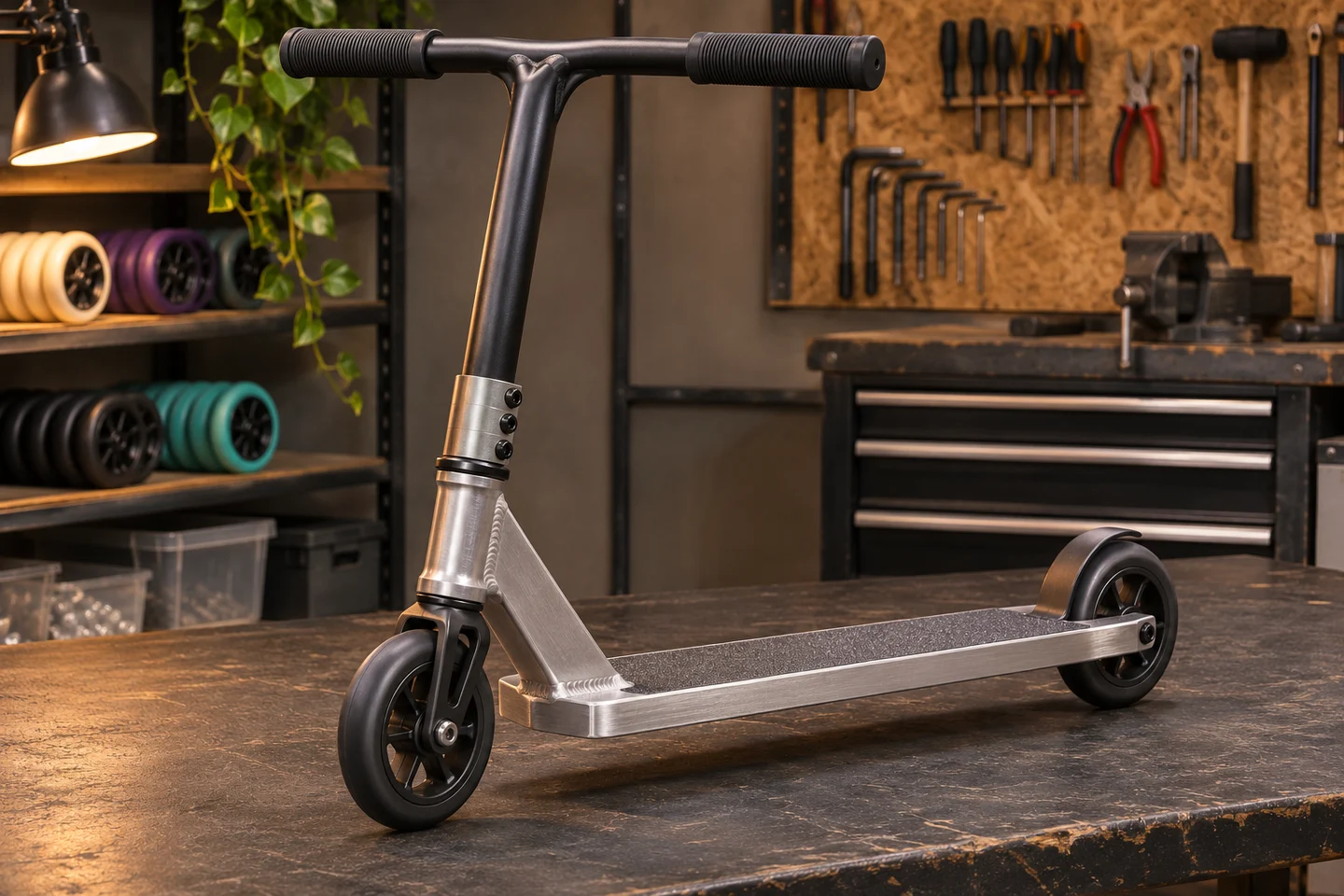
A first stunt scooter has to feel manageable on the flat before the rider takes it anywhere near a ramp. A complete is the simplest route into the park. The deck, fork, bar and compression system are made to work together, and you have a starting point for upgrades once you know how you like to ride.
Compare two scooters with the same overall height
Overall height is often measured from the ground. For fit, compare the height from the deck where the rider stands to the grips. Stand on the deck in riding shoes, with elbows slightly bent and shoulders relaxed. Try reaching the rear brake without turning your whole body. Check the deck still feels manageable when you lift the front end.
| Main use | What to compare | Why it matters |
|---|---|---|
| Park sessions and ramps | Compact deck, manageable weight, comfortable bar height | Easier to move beneath the rider and to lift. |
| Street and ledges | Deck width and room for both feet | More space to land. The scooter can feel heavier to move. |
| Growing beginner | Reach, deck length and the manufacturer’s rider limit | The rider needs to steer and brake with control today. |
| A short trip with no tricks | Recreational or commuter model | Folding and larger wheels can help on the journey. Use a stunt model for repeated ramp landings. |
Know what you can replace
Find out the compression system and the wheel size listed for the actual model. Note the hub width and axle diameter. Bars, forks and clamps may look alike without being compatible. Keep the model name handy if you want to upgrade later. Budget for protection and any assembly the retailer or manufacturer requires.
Compare one scooter in use before buying another
If you can try a scooter at a lesson, note where the bars sit when you put both feet on the deck and whether the brake is easy to reach. A rider who is tall for their age can still prefer a short deck. Once basic control is comfortable, ask what they would change about the weight, bar position or room for their feet. That’s a better reason to upgrade than age alone.
Check replacement wheel compatibility
Run through the pre-ride checks
Explore the scooter range
 Frenzy 205 mm Dual Brake V4 Recreational Scooter
 Frenzy 205 mm Air Zero Recreational Scooter
 Slamm Team Swirl Scooter Grips 165 mm
Compare the deck and bars where the rider stands
Deck length on a listing is usually the whole deck. The standing space is the clear area between the head tube and brake or fender. Ask for that usable length if a young rider needs both feet on the deck. A wider deck can make landings easier to find, but compare how much weight and space the rider can manage when lifting or turning it.
Use the actual deck-to-grip height. A comfortable starting point is somewhere between hip and waist for many riders, but stance and preference change it. Try both hands on the grips with elbows bent, then look for knee clearance in a turn. If the rider has to reach up or hunch to keep control, compare another size. Keep a note of the model and wheel fit so future spares are easier to identify.
Identify bar, clamp, fork and wheel standards
Frequently asked questions
Is a folding scooter suitable for a skatepark?
Choose a purpose-built stunt scooter for repeated tricks and landings. Check the park’s rules and use equipment within the maker’s intended use.
Can I buy taller bars later?
Usually there are options, but the bar diameter, clamp and compression system have to match. Check the specific model before buying.